

How Zanus AI Empowers Public Safety Agencies
Public safety agencies operate in the most demanding environments government faces. Police officers, firefighters, emergency medical teams, 911 dispatchers, and disaster response organizations are expected to act quickly, coordinate flawlessly, and document everything — often under extreme pressure. At the same time, these agencies carry some of the most sensitive data in government, making security, privacy, and compliance non-negotiable.
Zanus AI was designed to support public safety where it matters most: behind the scenes. By running as a fully private, on-premise AI system, Zanus AI strengthens operational readiness, improves coordination, and reduces administrative burden — without sending sensitive information outside agency control.
One of the greatest challenges facing public safety agencies today is the volume of information they must process. Incident reports, dispatch logs, body-cam transcripts, radio communications, after-action reports, training manuals, and policy documents accumulate at a pace that overwhelms human review. Zanus AI helps agencies regain control of this information by automatically organizing, summarizing, and making it searchable. Command staff can quickly understand what happened during an incident, identify patterns across cases, and focus attention where it is most needed.
For police departments, documentation consumes a significant portion of officer time. Writing incident reports, summarizing statements, and completing compliance paperwork often takes officers off the street. Zanus AI accelerates this process by assisting with report drafting, summarizing narratives, and extracting key facts from supporting materials. The result is not automation of policing itself, but a meaningful reduction in administrative workload — allowing officers to spend more time serving their communities.
Fire departments and emergency medical services face similar challenges. Post-incident reporting, equipment logs, training documentation, and compliance records are essential but time-consuming. Zanus AI streamlines these tasks by summarizing incident data, organizing maintenance records, and assisting with training and certification documentation. Chiefs and supervisors gain faster insight into operational readiness, staffing needs, and resource allocation.
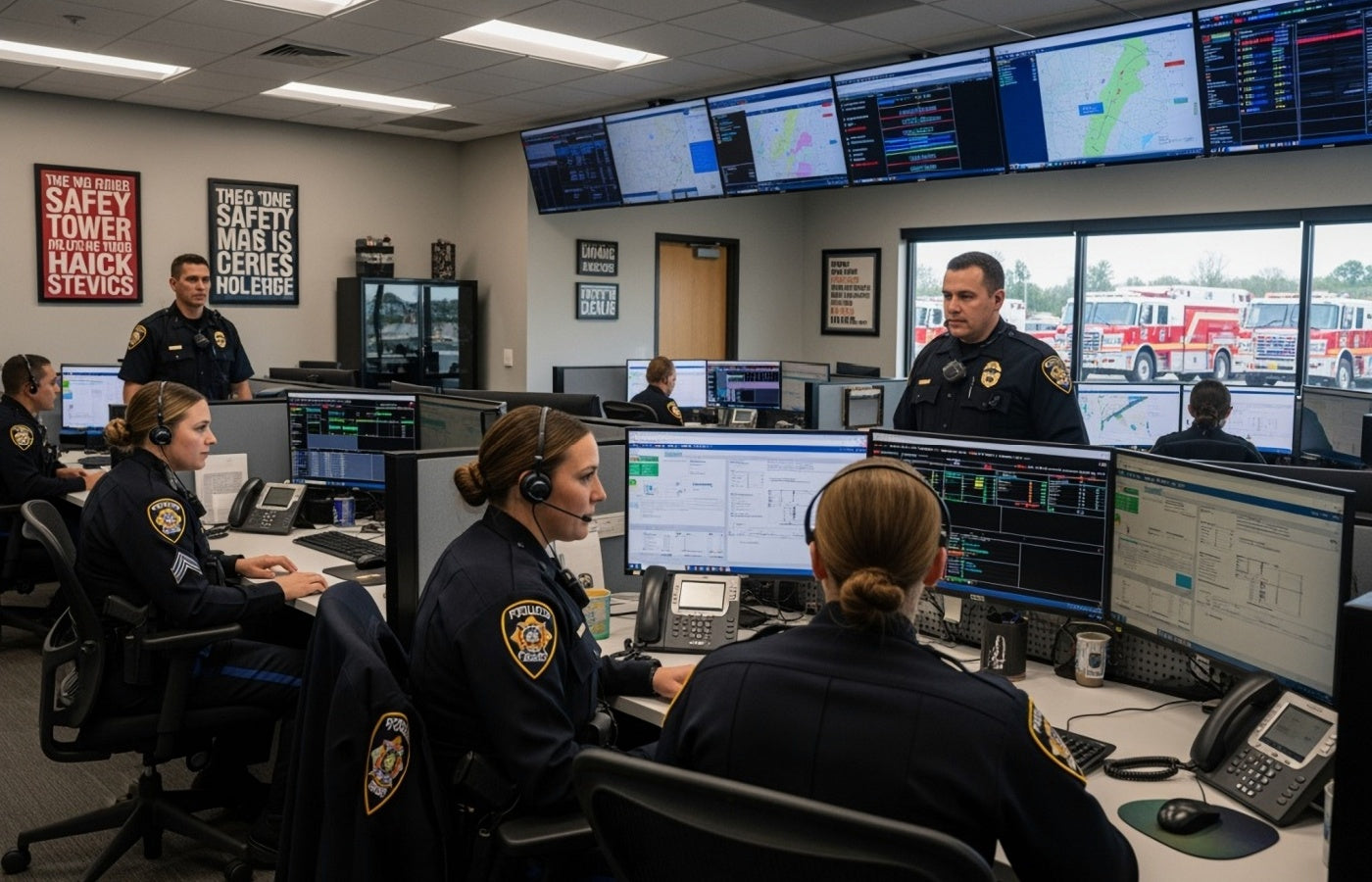
For 911 centers and emergency communications, speed and clarity are critical. Zanus AI can analyze call data, dispatch logs, and response times to identify bottlenecks or recurring issues. It helps supervisors generate performance summaries, improve call-handling procedures, and document incidents more efficiently. Over time, this leads to improved response coordination and better outcomes for both citizens and responders.
Disaster response agencies and emergency management organizations, including FEMA-aligned operations, face unique coordination challenges. Large-scale emergencies generate vast amounts of situational data, interagency communication, and after-action reporting. Zanus AI supports these efforts by consolidating information from multiple sources, summarizing evolving situations, and preserving institutional knowledge for future response planning. Lessons learned from past disasters are no longer buried in lengthy reports but remain accessible and actionable.
Training and policy management are also critical areas where Zanus AI delivers value. Public safety agencies must regularly update policies, procedures, and training materials to reflect new laws, standards, and best practices. Zanus AI helps summarize policy changes, assist with training material development, and ensure consistency across departments. New personnel can be onboarded more quickly, while experienced staff remain aligned with current protocols.
Perhaps most importantly, Zanus AI enhances public safety without introducing new risks. Because it operates entirely within agency infrastructure, sensitive data such as criminal records, medical information, emergency calls, and operational plans never leave government control. This supports compliance with CJIS, HIPAA, and other regulatory frameworks, while reducing exposure to third-party or cloud-based vulnerabilities.
In practice, Zanus AI empowers public safety leaders to see more clearly, act more quickly, and manage their organizations more effectively. By reducing administrative overload, improving situational awareness, and preserving institutional knowledge, it allows agencies to focus on their core mission: protecting lives, property, and communities — safely, securely, and with confidence.